Weird, Wild Colorado

by Jennifer Frazer on September 27, 2010

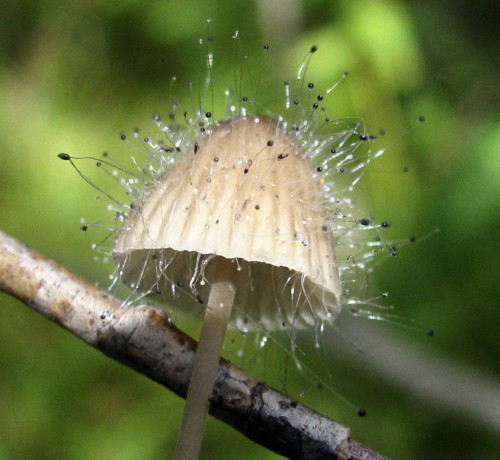
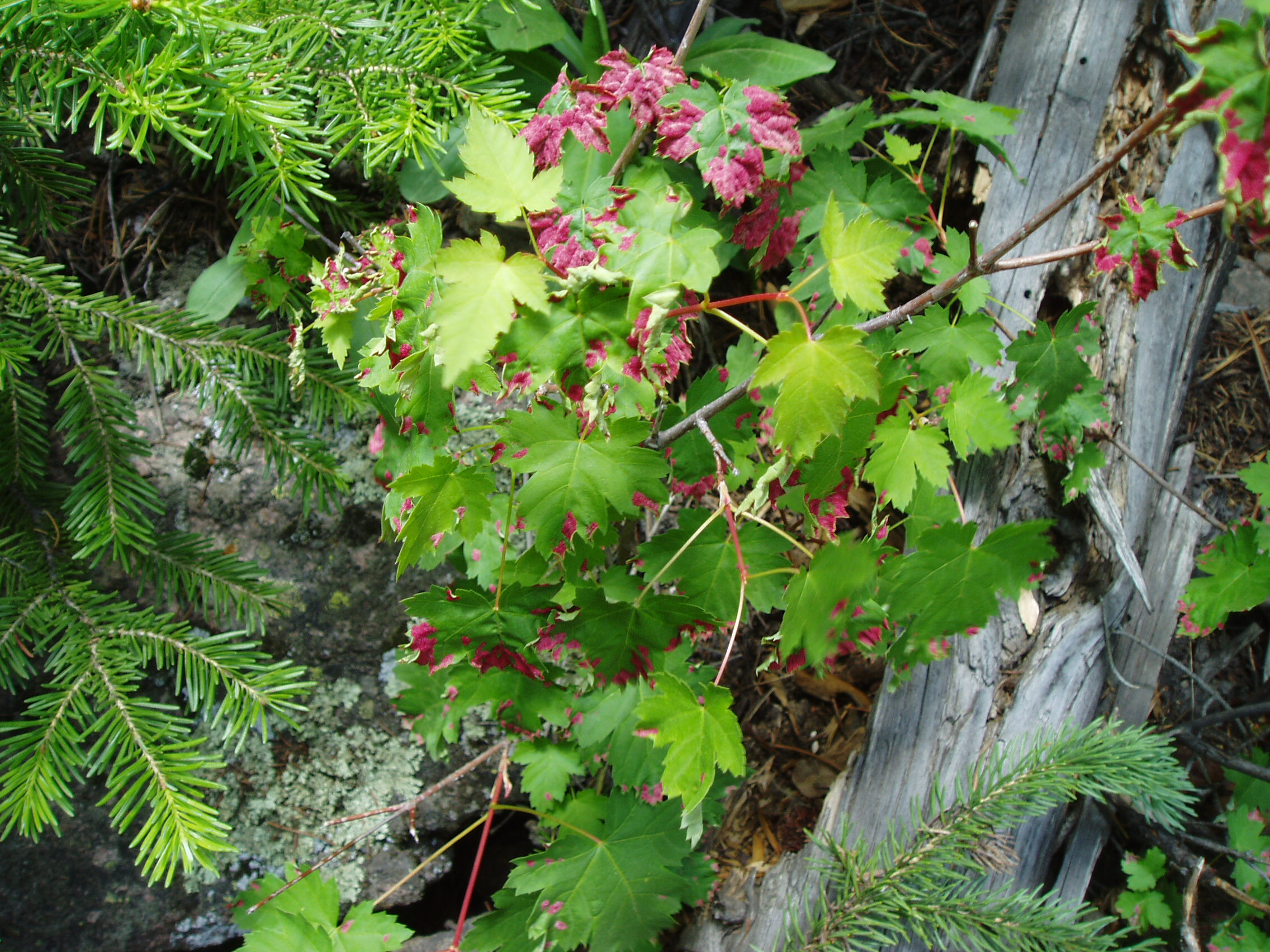
Photo by Mary Jane Howell.

I‘ll be giving another public lecture this Wednesday night at the CU Natural History Museum. It’s called “Weird, Wild Colorado: Life Forms that May Surprise You from Forest, Field, Tundra, and Bloodstream”. 7p.m., on campus at the museum. Details here. Hope to see you there!

{ 6 comments }

The Wolf of the Vegetable World

by Jennifer Frazer on September 26, 2010

Your broccoli's 1,458th cousin, once-removed. Creative Commons Kulac.

So let’s say you’re a wild leafy vegetable, innocently minding your own business on limestone seacliffs on the coasts of southern and western Europe. Suddenly, some prehistoric human takes it into their head that you are worth installing in their newfangled “garden”. Fast forward several thousand years, and the results of that domestication almost put Westminster to shame.

That plant was Brassica olearaca — wild cabbage — and it has become the stuff of vegetable legend. For the progeny of that ancestral plant, when subjected to many thousands of years of natural mutations and careful selection of the result by humans, has evolved into a cohort of vegetables that either strike fear or delight in the hearts of man. They are (drumroll please):

  • Broccoli
  • Cauliflower
  • Kale
  • Collard Greens
  • Chinese Broccoli
  • Cabbage
  • Kohlrabi
  • Brussels Sprouts
  • and last post’s mystery vegetable, Romanesco.

In all of these plants, gardeners noticed interesting traits that emerged over the generations in their garden, and began to selectively breed for ones that were desirable. In broccoli and cauliflower they selected for genes that put flower development on overdrive (the tumorous mass at the top). In cabbage, they selected for genes that caused the apical (apex) bud to stop growing vertically and swell with leaves. In Brussels sprouts, they selected for the same process, but instead of the apical bud, to the lateral buds that develop from each leaf axil (junction) with the stem. In kohlrabi, they selected for a big fat swollen stem itself. And in kale and collard greens, they selectively bred plants with the biggest, fluffiest green leaves. This is artificial selection, and it is evolution every bit as much as natural selection is. Darwin noticed the same process had taken place when humans turned wolves into dogs, and pigeons (Columbia livia) into the explosion of bizarre and sometimes disturbing forms favored by pigeon fanciers. And we all know how the dog thing turned out.

As Amy correctly intuited in the comments to the last post, romanesco is most closely related to the cauliflower branch of the family tree. For those who care, according to the wikigooglepediatron, romanesco was first documented in the 16th century in Italy, but was probably around for quite a while before that. Obviously, in Romanesco some gene (or genes) for floral development got turned on and stuck in Sorcerer’s Apprentice (or Funhouse Mirror) mode, splitting and dividing and spiraling seemingly ad infinitum. And, being human, we couldn’t help promoting(bio-pun!) this. Could we be satisfied with the lumpy and grotesque flower-buds-on-steroids approach of broccoli and cauliflower? No! We must have flowers to feed our soul. We must have . . . romanesco.

{ 5 comments }

Forget Sea Slugs . . . How about a Fractal Vegetable?

by Jennifer Frazer on September 24, 2010


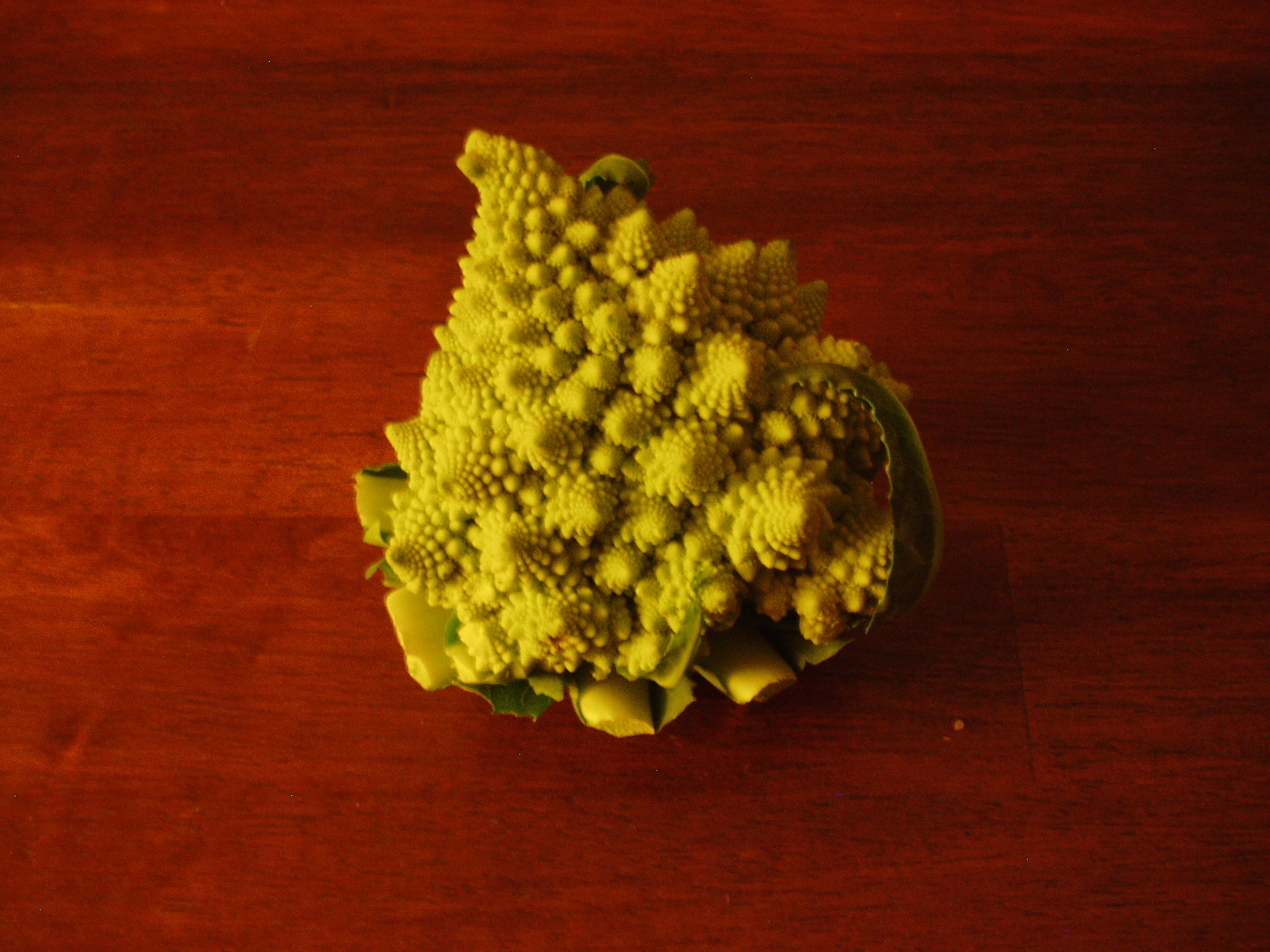
Anyone want to take a guess as to what this might be? I have also heard it referred to as the “Fibonacci Vegetable”, which reminds me of a certain other video I posted to this blog a while back. The good people at the local Holy Foods gave it to me for free when I expressed interest in it. And I have to say . . . it’s pretty tasty with a little garlic and a splash of tamari and sesame oil. No word on its use as a possible college dorm room poster subject.

{ 8 comments }

Chimaeras of the Deep

by Jennifer Frazer on September 16, 2010

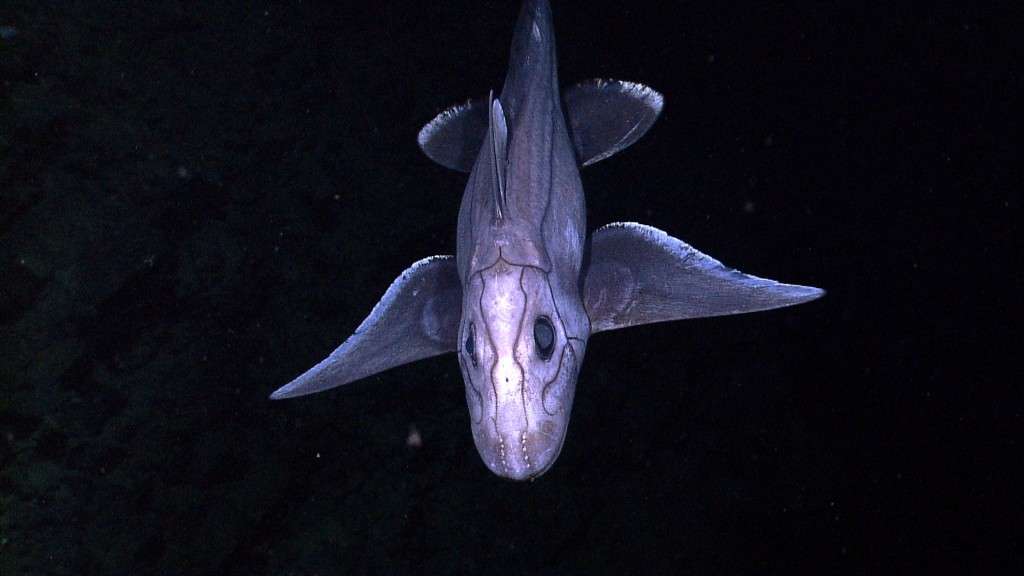
Image courtesy of NOAA Okeanos Explorer Program, INDEX-SATAL 2010.

One of the most intriguing images caught by the Okeanos Explorer was this portrait of a ghost shark, or chimaera*. Sporting a mask-like face that seems to combine the most haunting characteristics of the spook and demon bunny from Scream and Donnie Darko, this animal is one that would surely strike fear in any heart were one to encounter it mano-a-fisho at 4,500 feet. At the same time, there is a sculptural beauty in its features that is hard to define and rarely encountered elsewhere in the vertebrates, or backboned animals. And those eyes  — those ghostly eyes . . . not to mention the spiked retractable sexual organ on their foreheads.

What makes the real-life chimaera extraordinary is its place in the tree of jawed fishes: it may be the most anciently formed lineage around today. Chimaeras split from sharks sometime in the Paleozoic, the several hundred million year stretch preceding the Mesozoic, or age of dinosaurs. It happened sometime before the Permo-Triassic extinction 250 million years ago (the greatest Earth has ever seen) that ended the Paleozoic, and the Cambrian explosion, “modern” life’s great diversificiation, which took place some 550 million years ago.

Specifically, it happened during the Devonian (ca. 420-360 million years ago), a time of great experimentation, a time when early armor-plated fishes like now-extinct placoderms roved the seas. It was just at this time that three major groups of jawed fish — the placoderms, cartilaginous fishes (chimaeras are in here) and ancestors of ray-finned fish (most everything else) — evolved from jawless fish that might have resembled lampreys or hagfish. The resulting group, the gnathostomes (lit. jawed mouths), represented a major milestone in vertebrate evolution. Jaws are great for crunching and munching. That is, for grasping relatively large prey so it can’t get away while you’re trying to eat it, and for magimixing your prey once teeth evolve on the jaw. The previous, less-enticing system can be summarized (not entirely, but relatively closely) by its section title in my college biology text: “Sucking Mud: The Rise of the Vertebrates”.

As cartilaginous fishes, chimeras share several features with the sharks and rays. All cartilaginous fishes, or Chondrichthyans (sharks, rays, and chimaeras), possess a cartilaginous skeleton**, though it seems they once possessed bone. For one, their sister group, the extinct placoderms, were armed to the teeth in bone (As an aside, the armoring of fishes seems to have taken the opposite path of the evolution of European armor: fish seem to have started with large bony plates and evolved toward the mail-like coats of scales seen today***. Contrast this with sharks, who are literally armed with teeth, since their placoid scales and all vertebrate teeth evolved from the same ancestral structure). And second, cartilaginous fishes (and all jawed fishes) seem to have evolved, like the placoderms, from bony jawless fish.

Chimaeras are the most primitive (i.e., split off from the rest of the groups earliest) of the cartilaginous fishes. They are crunchers of hard food, possessing, instead of rows of bristling, disposable razor blades like sharks, permanent bony plates which they use for crushing mollusk shells like nutcrackers. The vast majority are found in deep, dark water far from coasts.
Most notably, males of these species don’t possess a penis, but they do possess an arsenal of other interesting sexual organs. Like sharks, near their genital opening they possess a pair of “claspers”, which they use to grip the female in the pertinent location, and which have grooves for funneling sperm. Some chimaeras take this one step further by deploying what can only be described as a medieval-looking cephaloclasper that expands and retracts from the tops of their heads (view all these delightful accoutrements here). To my knowledge (which is very small), no one has actually ever seen this thing in use, so speculations on its actual purpose and function are just that. It is a good thing men don’t have such a thing, since they’ve already got enough problems with the ones they’ve got getting stuck in zippers, hotel rooms that rent by the hour, weekend “hikes on the Appalachian trail”, etc. If they had spiked, retractable sexual organs on their foreheads. . . well, God help us all.

Adding to the thrill of what must certainly be some of the most interesting sex in the vertebrates is the added difficulty that each one of these babies carries a spine in front of their dorsal fin loaded with a venom sac at its base. Which means the joke must go: How do chimaeras mate? Answer: Very. Carefully.

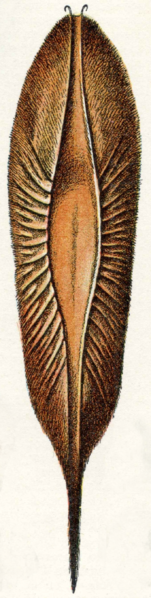
The equally fascinating product of all this maneuvering is something that is also known from the world of sharks: beautiful, leathery egg cases (see longitudinal view, left), also called mermaid’s purses. They are deposited on the seafloor where they harden and darken as the young chimaeras grow within. Some sharks have developed vivipary, or live birth, like humans, but that does not seem to have happened yet for chimaeras, and I can’t blame them. I know I’d rather lay a nice, rounded egg case and kick back with a margarita to watch on the blessed day. Stupid natural selection.

Here’s a nice tree showing the vicinity of the chimaeras at the jawed fishes junction . . .

________________________________________________________________________________

*Those who have studied Greek mythology will recall that the classical chimaera was a fire-breathing lioness with a snake for a tail and a goat’s head improbably sprouting from its back. Today the term is used in biology for individuals with cells that originally came from two different zygotes, or fertilized eggs. How or why the ghost shark acquired this name I have not been able to discover.

** but they do have calcified stiffenings of their backbones that function like vertebrae

*** Alive without breath,
As cold as death;
Never thirsty, ever drinking,
All in mail never clinking.

Additional sources:

The Variety of Life (Tudge)

Life (Purves, Orians, and Heller, 4th ed.)
{ 5 comments }

The Reports of Our Incineration Have Been Greatly Exaggerated

by Jennifer Frazer on September 15, 2010

Last week you may have heard the forest west of Boulder was burning, which was true. 166 homes were destroyed, making it the most destructive fire in Colorado’s history. You may have even heard the city was endangered, which was also true for about an hour on Thursday night (but it could have been much more; the windstorm was mercifully brief) as winds gusted to 65 miles per hour. I had three calls from people out of town that day checking on me to make sure I was OK since the news of our possible demise evidently made it onto NPR. The fire is completely out now, and we escaped unscathed. But I just found this beautiful time lapse video of the conflagration, which makes it seem as much a living, breathing organism as many things I post here. Hope you enjoy.

{ 3 comments }

The Cnidarian Solution to a Bad Hair Day

by Jennifer Frazer on September 8, 2010

Been one of those kinda weeks? Don’t feel like crawling out of your shell this morning to face the world? And, most importantly, are your antennae simply not cooperating with you today (it’s always like this on those high salinity days)? Then fear not! Biology to the rescue!

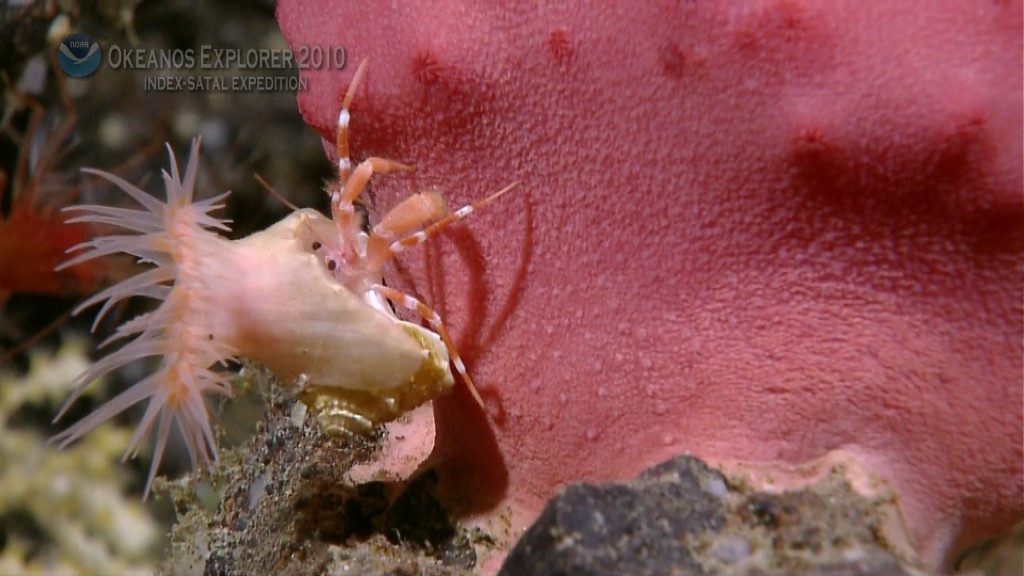
Does this make my shell look fat? It's only a matter of time until a rapper finds and appropriates this fashion statement. Image courtesy of NOAA Okeanos Explorer Program, INDEX-SATAL 2010.

Yes, you too can own a fabulous anemone toupée, should you be willing to scuttle about on soft corals hauling a huge-*** but apparently inviting shell on your back on the flanks of the Kawio Barat volcano in the Celebes Sea. Our friends aboard the NOAA Okeanos Explorer (whose video of the depths off Kona, Hawaii I covered here earlier this year) have been sailing the south seas in search of new life and new civilizations (OK, maybe just new life, unless James Cameron is on board). But what life it is! This photo is one of the fruits of their labor, but check out the slide show at National Geographic, or the slightly less user-friendly but more extensive slide shows a the Okeanos Explorer’s home page to see the rest. It’s Don’t Miss for those of us with biodiversity addictions.

The notes for this image state that the anemone is an “episymbiotic organism”, since the shell provides a home for two creatures (and once housed a third — a gastropod). Since anemone arms are ouch-y, if the crab ever finds itself in the bad section of Kawio Barat, all it has to do is hunker down and let its extensions do the work. Medusa, eat your heart out*.

—————————————————————————————————

* Also, perhaps not uncoincidentally, the generic name for a free-swimming jellyfish, which is itself an upside-down anemone.

{ 5 comments }

You Mite Want to Get That Looked At . . .

by Jennifer Frazer on September 1, 2010

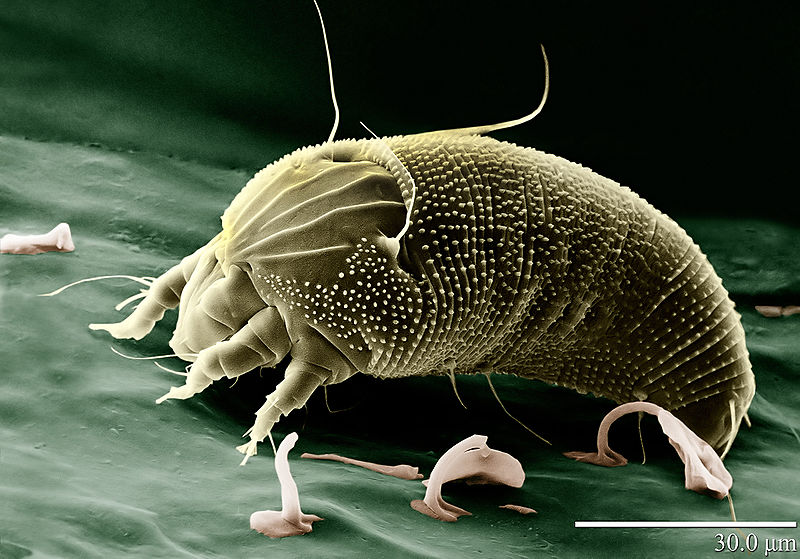
I look like this some mornings before my first glass of OJ.

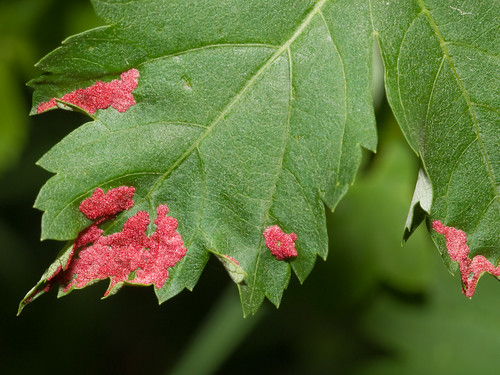
As ace reader Janice correctly guessed, the red velvety patches — really galls, or abnormal plant growths caused by the invasion of a parasitic organism — from the last post were created by a tiny erineum mite (Aceria sp.). I’ve seen many a gall in my time, and I *never* suspected that the scarlet patches were the product of gall-making critters. After several years of seeing these scarlet patches and having no bloomin’ idea what they were, I had to consult my old pathology of trees and shrubs professor (and author of “Magical Mushrooms, Mischievious Molds“) Dr. George Hudler, who clued me in.

So what might a mite be, anyway? Well, like the bio-faux pas of calling a mosasaur a dinosaur (Paleontologists: “It’s a marine reptile, d***it!”), never call a mite an insect. It’s a greatly evolved arachnid, like spiders, ticks and most scorpions (excepting the ones with power ballads). Most arachnids have eight legs, plus two pairs of special mouthparts called chelicerae and pedipalps. Mites, which properly include the ticks, are among the most successful invertebrates on earth, and are the only arachnids that have been found in Antarctica. Some are completely self-reliant. But because mites are (as their name accurately implies) so tiny, many others specialize in freeloading, which they have elevated to an art form. They cause mange (sarcoptic mange mites); they live in dust and cause allergies (dust mites); wreak destruction on colonies of honeybees (varroa mites); chew holes in, and cause untold agony among witless, unprepared southerners (chiggers); decimate house plants, including many of the prized specimens of this author (spider mites); and they frolic about your eyelashes, follicles, face, pores and skin, eating dead skin cells and sebum, going out for evening constitutionals on your sleeping face and, I’m sorry to reveal, making more mites (demodex mites).

And they make galls. Though not all plant galls are mite-induced (tiny gall wasps being the other major cause), many are. An entire family of mites, the Eryiophyidae, have adopted this lifestyle, and these galls can take on all sorts of fantastical forms and colors. Erineum mites have a few quirks; they have only two pairs of legs, for example, as you can see above. And they are REALLY tiny. without a dissecting microscope, you are unlikely to be able to see them, even with a hand lens, as they are only .05 to .2 mm long (i.e. 50 – 200 microns long! The spores of the fungus I published my first master’s thesis on where in that range!).

So how do erineum mites coax the plant into making those crazy galls? After overwintering on the tree, the females jump on young leaves and start feeding on the underside. Chemicals in their saliva stimulate the growth of the velvet patch, or erineum (pl. erinea, whence the mites get their name, though whether the scarlet pigment is mite-produced or mite-induced I have not been able to discover). Then they crawl inside. And guess what? The velvet patch is both maternity ward and love shack. That’s right: if this gall’s a rockin’ . . .

The good news for maples (Acer sp., the major target of the aptly named Aceria sp.), is that the galls rarely harm the tree. Instead, think of them as hip, festive forest decor. Without erineum gall, that copse of trees just has no “pop”. : )

To find these suckers in the tree of life, look for Eriophyoidea here, and back out by the arrow on the left to get a sense of where you are.

An additional source used in writing this post can be found here.

{ 3 comments }

My Maple Shrub is Flaming

by Jennifer Frazer on August 30, 2010

Here in the Colorado Rockies we have few tree species compared to many other forests of the world. If you learn about 14 trees, you’ve learned 95% of the native trees in the state. Of those, only two are hardwoods — quaking aspen, and plains cottonwood. But we do have a maple — well, a mapley sort of shrub, anyway: Rocky Mountain Maple, Acer glabrum.

Many times in the last six years I’ve encountered examples of this shrub that look like they could use some Tucks Medicated Pads:

Here’s a close-up someone else took. So here’s your quiz for the week: What is this? Here’s a hint — It’s NOT a fungus, which was certainly my first guess. Good luck, team.

{ 7 comments }

A Sea Slug of Fractal Beauty

by Jennifer Frazer on August 25, 2010

Image: Creative Commons Taro Taylor/dapete

While it’s only a few centimeters long, this hallucinatory sea slug — Glaucus atlanticus — makes a living doing something few other organisms dare: snacking on the “Blue Fleet”, or collection of stinging, floating filter feeders found at the surface of oceans around the world. These wind-driven organisms (which will all be covered here at some point) include the by-the-wind sailor, blue buttons, the violet snail, and, most famously, Portuguese Men o’War, Physalia physalis.

The man o’ war floats on the surface like a plastic shipping cushion, dangling streamers of nematocyte-bearing and swimmer-irritating tentacles below (remember what those are?). G. atlanticus (also known quite poetically as the sea swallow) roams about the surface, trippy belly up and silvery top down, looking for its prey like pac-man pellets (though whether the sea swallow swims to its quarry or merely relies on bumping into it is still a point of contention among scientists). The sea slug, obviously, is immune to the stings and instead stores the venom at an even higher concentration at the tip of its feathery “cerata” (singular ceras), or body projections, for use in its own defense.

The sea swallow’s psychadellic cum mathematical coloration is allegedly a classic case of “countershading” camoflauge. From above, the blue and white confuses seabirds, while from below, the silvery top/bottom appears as just another section of sea.

Here’s an interestingly-scored home-video* of a day when someone walking along the beach found the wind had driven in scores of these little beauties, and who decided to cast as many back to sea as he could find to continue their vicious (but ecologically useful) bouts of predation. Gold star for the wise use of safety sand.

Sea slugs like the sea swallow are in the Heterobranchia within the gastropods (the snails and slugs), which are themselves nested in the molluks. You can explore this section of the tree of life here.

Kudos to my friend Molly for passing on a note alerting me to this little gem. Thanks Molly!
__________________________________________________________________________
*Look for the bonus blue button toward the end!

{ 6 comments }

Biodiversity Blog Nod

by Jennifer Frazer on August 22, 2010

A bit of cool news today . . . this blog was chosen as the second-best biodiversity blog by the Pimm Group, by (I presume) Dr. Stuart Pimm. According to the site, “Dr. Pimm is Doris Duke Chair of Conservation Ecology at the Nicholas School of the Environment and Earth Sciences at Duke and one of the most cited scientists working in the field of conservation biology.”

{ 3 comments }